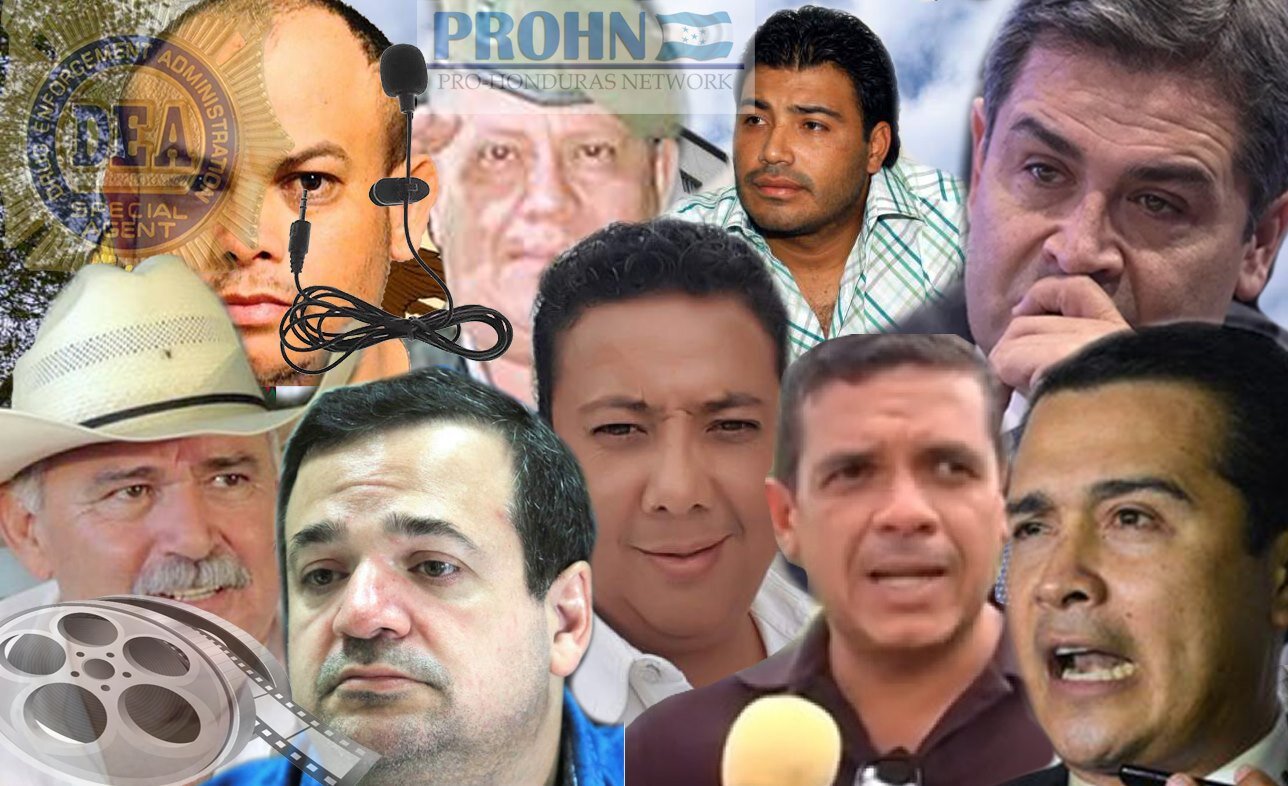
DAY ONE: Trial Against David Castillo, Co-Author of Berta Cáceres's Murder

Context:

Roberto David Castillo Mejía is charged with being the intellectual author of the murder of Berta Cáceres Flores. Castillo, by law, has to be present at his trial.

[NOTE: COPINH and Berta Cáceres’s family do not consider David Castillo to be an intellectual author of Berta’s murder despite being charged as such. COPINH has publicly stated that Castillo was following orders and that he was protecting the interests of others. For these reasons, COPINH calls Castillo a co-author of Berta’s murder to make it clear that Castillo is responsible for her murder, but not the only person that made the decision or paid for Berta to be killed]

Day one was transmitted live on Facebook: https://fb.watch/4IAaXEgVy_/

These notes are presented as an overview of the daily occurrences of the trial against David Castillo. Despite the trial being broadcast live over Facebook, the audio quality of both the court microphones and the phone used to broadcast the trial are of very poor quality. It’s more likely than not that details were missed or are not outlined correctly in these notes. I will try to post edits if details are found to be incorrect, misreported, or missed but encourage everyone to seek verification from the Civic Council of Popular and Indigenous Organizations of Honduras (COPINH)’s Facebook and website. I will try to post daily but again, this depends on whether the trial is audible and whether its actually broadcasted consistently. This has not been the case in the past. COPINH will be posting regular updates on their Facebook as well which can be found here

These notes do not intend to give any legitimacy to the Honduran judicial system, it’s transparency, or its ability to guarantee due process, particularly in the case seeking justice for Berta Cáceres. Instead, these notes aim to provides details that illustrate the serious procedural and judicial concerns with legal processes in Honduras, in general. This includes the ways in which powerful figures like David Castillo through his defense attorneys, attempt to manipulate, delay, and obstruct justice sought by Berta Cáceres’s family and COPINH.

Main Points of the Day:

  • The start time was delayed by 5 hours because the accused, Roberto David Castillo Mejía was not brought to the court on time

  • International observers including the Office of the High Commissioner for Human Rights (OHCHR) and the International Mission of Experts, were denied entrance into the trial.

  • Despite formal requests to the court by the lawyers representing Berta Cáceres’s family, Laura Zúniga was not permitted to observe the trial in person.

  • David Castillo’s defense attorneys try once again to delay the trial and request to postpone it. At 6:20 pm local time, the court denied the request. The trial will continue tomorrow at 9 am.

More Details:

Start Time Delay:

The trial was supposed to begin at 9:30 am but was delayed until 2:30 pm. The head judge explained that this was not the fault of the court. The National Penitentiary Institute (INP) which is responsible for overseeing prisons around the country and also responsible for ensuring that prisoners are taken to their legal hearings, medical appointments, etc., was delayed at sending Castillo to the trial despite the court’s written requests to INP authorities notifying them of the trial date and time. The head judge noted that this is a consistent problem across several cases and asked the court secretary to send a letter to the military battalion where David Castillo is being held to notify them of the trial’s dates and to prevent the delay from happening again.

[NOTE: Both the INP and obviously, military battalions are under the control of the Honduran military. The head of the INP is Rony Javier Portillo, a retired military colonel. Also, military battalions are believed to have some of the best prison conditions in the country and only those with special circumstances or statuses are jailed there.]

Details about the Court:

All trials in Honduras are heard by three judges. This case is being heard in the National Jurisdiction Court system, a court system created to hear cases related to organized crime.

Participants:

  • Honduran Prosecutors: Javier Nuñez and Ingrid Figueroa

  • Private Accusers: Lester Castro and Victor Fernandez, representing Berta, Laura and Olivia Zúniga Cáceres, Berta Cáceres’s daughters, and Austra Berta Flores, Berta’s mother; and Koritza Cortez and Pedro Mejía, representing Salvador Zúniga Cáceres, Berta’s son.

    • NOTE: Under Honduran law, victims can request to be private accusers and participate fully as actors in the trial when permitted by the relevant court. In the case against the eight accused material authors of Berta Cáceres’s murder, the private accusers representing Berta’s family were kicked out of the process by Honduran judges and were unable to participate in that trial. In this legal process, so far, two private accusers representing the family have been permitted.

  • Defense: Ritza Antúnez and Juan Sánchez Cantillano representing Roberto David Castillo Mejía.

    • NOTE: Ritza Antúnez is the same attorney who represented Mariano Diaz Chavez, a US-trained special forces major who was convicted in December 2018 of Berta Cáceres’s murder.

Procedural Requests Made Before the Trial Formally Begins

  • By Private Accusers:

  • Castro requests that at least one of Berta’s daughters, Laura Zúñiga be allowed to physically observe the trial as a victim.

  • Court rejected request indicating that they had resolved previous requests for family to observe but needed to enforce Covid-19 health measures. The defense clarified that the specific request had been different than this particular one. The court responded that the victims could observe the trial virtually denying the presence of one of the victims inside the courtroom.

  • By Castillo’s Defense:

  • The defense requests that the trial be suspended because of the following pending legal motions and issues related to expert witness testimony that the defense wishes to present as evidence in trial [NOTE: This is normally done in the evidentiary hearing but it’s permitted at the beginning of the trial as well]. These include:

    • 3 pending amparos: The defense argues that they are waiting on the resolutions of three amparos or legal motions challenging different rulings or procedural decisions related to the trial. These include: A motion to recuse the judges hearing the case; and motion(s) challenging decision(s) related to evidence presented during the evidentiary hearing.

    • Inability to present completed expert witness testimony because one expert witness is sick with Covid-19; another expert witness traveled from the United States to Honduras at the end of March to get a USB containing phone data which was not given to such expert; and the Prosecutors have not handed over an LG phone with relevant phone data needed to complete the expert witness analysis.

  • Prosecutor’s Office Response:

    • The arguments made in the three amparos are similar arguments made in previous hearings. One amparo was just presented yesterday and still has not even been admitted [accepted by the relevant court]. The other two were admitted by the relevant courts that then did not order the trial process to be suspended pending resolution of such motion [suspensión del acto reclamado].

      • A lot of the evidence requested by the defense that is needed to complete the the expert’s analyses of evidence has been available since August 2020. Presenting evidence to be used in the trial on the day of the trial is allowed as long as it does not delay the trial.

      • Discussion between the prosecutors and the judges clarify that the LG phone requested by the defense from the Prosecutors was never evidence used in this particular case and is in the possession of another office of the Attorney General’s office subject of another legal case. The USB also requested by the defense was not given to the US experts because the court secretary was concerned it would violate the chain of custody. The contents and the USB have been available for several months.

  • Private Accusers Response:

    • Asked for the Defense’s request to be denied and for the trial to continue as scheduled. Repeated similar arguments as the Prosecutors and noted that the defense’s attempts to raise issue with evidence is an effort to delay the trial.

The head judge requests to suspend the trial and leave the courtroom to deliberate. As of 5 pm on April 6th, no news about the resolution was made public via Facebook.

Resolution:

  • At approximately 6:15 pm, the court rejects request by the defense to delay the trial noting that the Defense had sufficient time (since September 2020) to seek the relevant evidence needed for expert witness testimony/analysis. The court also ruled that they would not consider new pieces of evidence that had not been presented in the evidentiary hearing.

Picture from COPINH

Picture from COPINH

DAY ELEVEN: Geovanny Fuentes Ramirez Declared Guilty in New York Courtroom

What Happened Today:

  • The jury declared Geovanny Fuentes Ramirez GUILTY on three counts (paraphrasing these below):

    • 1. Conspiracy to import, manufacture, and distribute narcotics into the US,

    • 2. Using and carrying machine guns,

    • 3. Conspiracy to possess or carry weapons for drug trafficking purposes.

Key Details That Surfaced:

  • The US Justice Department published a communique following the guilty verdict. Read the public statement here. It mentions the involvement in President Juan Orlando Hernandez several times as well as the Attorney General Oscar Chinchilla.

Photo: Pro-Honduras Network

Photo: Pro-Honduras Network

DAY TEN: Trial Against Honduran Drug Trafficker, Geovanny Fuentes Ramirez

What Happened Today

  • Concluding statements

  • Jury began to deliberate

Key Details That Surfaced

  • An entire summary of the government’s evidence and case against GFR and the defense’s rebuttal.

What Will Happen Tomorrow

  • On Monday, the jury will continue to deliberate

Picture: Pro-honduras network

Picture: Pro-honduras network

More Details

Prosecutor’s Concluding Statement

  • There is overwhelming evidence that Geovanny Fuentes Ramirez (GFR) produced, manufactured, and trafficked tons of cocaine to the US using weapons and violence. He had a cocaine lab in the hills outside of his home that was protected by armed men. He bought and paid politicians and cops. He used handguns, assault rifles and grenade launchers to do this.

How GFR Got Started

  • GFR didn’t start out as a multi-ton drug trafficker. How did he make that rise happen? He partnered with drug cartels. He bought those he could and murdered those he couldn’t.

  • Over the course of this trial, you learned that GFR got started by partnering with Metro [Melvin Sanders, his former business associated, now deceased] to sell kilos of cocaine in Miami. Metro is a cousin of the Rivera Maradiagas, the leaders of one of the most powerful cartels in Honduras. GFR and Sanders, a drug trafficker, a hit man, and someone that obtained hit man for others, were partners.

  • In 2000s, they sent small quantities of cocaine to Miami. I say relatively small because each kilogram has 8,000 doses. These aren’t small quantities.

  • When the work in Miami fell through, in approximately 2010, Metro and GFR started a drug lab outside their hometown of Choloma.

  • But they needed to buy cocaine base and GFR needed money to get the lab up and running to produce cocaine and also, to make more money.

  • GFR used boats to bring base into Honduras for the drug lab and later, gave those boats to his drug trafficking partners.

  • For every thousand kilos of cocaine, the price of the cocaine by the border is $12,000 to $16,000. Because of these prices, the drug lab was important for GFR.

How We Know GFR’s Drug Lab Existed

  • The defense will explain that GFR didn’t have anything to do with the lab. But there is no dispute that he had control of the lab and had a coffee plantation there.

  • GFR told Leonel Rivera Maradiaga about the lab inside his car at Rivera Maradiaga’s gas station. GFR described the lab, how it was protected and he asked Rivera Maradiaga to help pay for the lab and cocaine base from South America.

  • GFR told Rivera Maradiaga about the lab, about the police investigation and about the raid of the lab. Because of corrupt police contacts, GFR knew about the raid and when it happened so no drugs were found.

  • GFR told Rivera Maradiaga again about the lab when he told him about the police he murdered – tortured and executed.

    • GFR, Metro and hit man found the police officer, kidnapped him, tortured him, and while the officer pleaded for his life, they killed him.

    • The murder wasn’t just about revenge. GFT had been tipped off – he did this for information. He wanted to know if Fuad Jarufe’s involvement had been uncovered. It hadn’t and GFR was happy because the man that had bankrolled his drug trafficking was in the clear.

  • Javier Choloma [Javier Hernandez Mejía, a former Honduran government treasurer, accused of money laundering in Honduras] told GFR that even though he had closed one investigation into the lab, there was a second investigation in the capital. To protect his assets, GFR and Metro used Javier Choloma to hide/protect the business.

  • Jose Sanchez knew about the drug lab. Jarufe had instructed Sanchez to go to the lab and deliver money. Both times, armed security (not coffee farmers) stopped him at the gate, just like GFR explained to Rivera Maradiaga that men with AK47s guarded the lab.

  • Two things happened after the raid:

    • 1. GFR laid low: After the raid, GFR wasn’t seen for a month. Witness Medina mentioned this.

    • 2. When GFR returned from lying low, he returned because he found a way out. He killed his way out of the first (killed the police officer leading investigation) and he bribed his way out of the second (through Julio César Barahona of the Judiciary Council). Barahona travelled to help GFR. He paid Barahona $30,000 bribe.

GFR’s Involvement with President Juan Orlando Hernandez

  • GFR partnered with Presidential candidate Juan Orlando Hernandez and his brother, Tony Hernandez (TH). In 2013, JOH was President of Congress. He was also the man that appointed Barahona as head of Honduran court system. JOH was running for President and could reap enormous bribes. Rivera Maradiaga talked about paying bribes to JOH, Porfirio Lobo, Mel Zelaya and to Ricardo Alvarez.

    • GFR used a page out of the playbook and used Jarufe for protection.

  • GFR gave President JOH $15,000 in cash, but JOH also wanted access to his cocaine lab. Access to the drug lab, which was located close to Puerto Cortés, would allow JOH to export through the port. The lab was worth millions that way. So GFR said he would give JOH access.

    • Tony and Juan Orlando Hernandez became GFR’s drug partners.

    • TH ran drugs for JOH. They accepted bribes from Los Cachiros.

  • GFR said he wanted Los Cachiros to invest in the lab but they didn’t, so they found other partners like Chepito Handal [a drug trafficker in the department of Cortés], TH and JOH.

GFR’s Work With Los Cachiros

  • The defendant wanted to work with Los Cachiros by running shipments of cocaine and finding hit man.

  • In approximately 2009 and 2010, Metro started pitching to his cousins (the Rivera Maradiagas) and his corrupt police contacts.

    • Drugs were brought in from boats and then had to be moved to where the Valles were located near the Guatemalan border. The drugs needed to be protected. They were transported in cattle trucks and protected by armed men.

Using Honduran Police to Protect His Drug Trafficking

  • (Show picture of Police Commissioner Martinez with JOH on the screen). GFR worked with dirty cops, including one of the highest-ranking police in Honduras.

    • He worked with Martinez to ship drugs

    • Police Commissioner’s LinkedIn page shows that he had been Director of Finance for the Honduran police and had taken courses on “best police practices.” He could protect GFR with a single phone call.

Corroborating Testimony With Evidence from GFR’s Phone

  • What Rivera Maradiaga said is true, because the evidence (pictures, chats, instructions, etc) from GFR shows us that.

  • Police Commissioner Martinez warned GFR about being subject to monitoring. Another contact told GFR to stop talking crap on his phone.

  • There were police and military contacts on GFR’s phone. Some of those contacts were made through Metro, who got his nickname because of his close relationship to the Metropolitan Police. Other contacts were dirty cops in San Pedro Sula.

  • The defendant’s phone had police contacts – both the Sauceda brothers who he met in Fuad Jarufe’s office.

  • He had military contacts. He was given a green AR15 rifle from his military friend. GFR bragged about this.

    • GFR’s son had pictures that matched the description.

    • GFR also had uniforms, handcuffs, and we know that because it was on his phone.

  • He received a gift from 105 Brigade. Rene Ponce Fonseca was head of that brigade and would later become head of anti-drug team on north coast of Honduras.

  • GFR had these contacts because he used them. He used them to protect his cocaine. He pitched these contacts to Los Cachiros in order to work with them and help him with his drug business.

Murders and Crimes That GFR Participated In

  • He didn’t just rely on dirty cops and military, GFR also relied on his own savagery.

  • Look at what happened to the mechanic: GFR saw an opportunity to impress Los Cachiros. He called his police contact, had the boat mechanic arrested, and murdered him. He took a picture of the dead mechanic and treated it like a job interview.

  • He was proud of it, bragged about it, and like Metro said: “would do anything” and soon enough started working with Los Cachiros and also started working with other large drug cartels.

The Three Drug Shipments

  • GFR protected 3 large drug shipments, 1. Approximately 425 to 530 drug shipment taken from El Tigre ranch to the Guatemalan border, 2. A drug shipment of 500 to 570 kilograms that landed on a ranch near Tocoa, 3. 425 to 525 shipment sent by Jack.

  • GFR used heavy duty weapons to transport.

  • He wanted to be the one selling and buying for himself. He used boats to bring cocaine base to be processed but also, bought finished cocaine.

Working With the Sinaloa Cartel

  • GFR wasn’t just working with Los Cachiros but also the Sinaloa cartel headed by El Chapo and El Chapo’s cousin Juanito”

    • GFR helped transport a 500 kilo shipment to the Sinaloa cartel and then 5000 kilos then 3,000 kilos. All of this cocaine was destined for the US through Mexican cartels.

Conflict With Los Cachiros

  • By this time, GFR wasn’t doing small drug trafficking. There came a time when he asked Rivera Maradiaga for a loan to buy a big shipment from Colombia.

  • Rivera Maradiaga didn’t give him the loan, so GFR got mad and tried to have him killed.

  • GFR and Metro hired Vaquero to kill. “Pluto” couldn’t sell the cocaine they supplied because it was wet, so defendant hired Vaquero to kill Pluto.

  • This was just part of a string of murders – the mechanic, the police officer, and the two hit man that had killed Metro’s brother

  • After Pluto’s murder, Vaquero told Rivera Maradiaga about the plan to have Rivera Maradiaga killed. So Rivera Maradiaga asked Vaquero to kill GFR and Metro. Vaquero took armed men to Metro’s house and killed him but GFR was a harder target. After Vaquero couldn’t kill GFR, Rivera Maradiaga and GFR spoke and called a truce.

  • Shortly after, Rivera Maradiaga started cooperating with the DEA.

GFR’s Relationship With Businessman Fuad Jarufe

  • GFR partnered with Jarufe, who acted as a money laundering and personal bank.

    • US dollars from drug trafficking are no good unless you can launder them. So GFR brought large quantities to Jarufe at a time. He was the only person he laundered money for, and he used his company to launder money. Sanchez knew this right away and acknowledged that he knew it was money laundering.

  • The defense might say that GFR is just a biomass businessman but you know they have to launder drug money. They used the same model that Rivera Maradiaga used. GFR took a page from Los Cachiros’ play book.

  • Jarufe gave GFR land in Cerro Negro. GFR killed the police officer investigating the land in order to protect Jarufe.

Partnership with President Juan Orlando Hernandez and the Drug Lab

  • The partnership started when JOH was running for President and also involved his brother, TH.

  • The defense council might argue that it was shut down after the raid. But it’s not true it was shut down.

    • No drugs were seized

    • The police officer was dead

    • And the head of the Honduran court system was bribed.

  • Another reason that the lab wasn’t shut down, is that there was too much money to be made.

  • GFR still had the drug lab. He still had a partnership with Chepe Handal and with the Sinaloa cartel. The supplies from Colombia were still there and he had an agreement with JOH and TH to continue the lab.

  • One more reason GFR didn’t stop was because would do the same thing after 2013, 2014, and as recently as 2019, 1 year before his arrest. He continued to meet with and pay bribes to JOH.

  • When he saw Rivera Maradiaga in prison, GFR told him about meetings with JOH as late as 2019, and also meetings with military sent on JOH’s request.

  • You know that TH was arrested and the information about JOH was made public.

    • On May 28, 2019, the defendant was going to the Presidential Palace in Tegucigalpa, repeatedly and went other places including to the Ministry of Economic Development.

    • Again in June 2019, shortly after more public filings were made, GFR was keeping close tabs on the case against TH, a co-conspirator.

Continuing His Crimes

  • A few other reasons you know he continued his crimes:

    • His phone: GFR didn’t have a list of contacts of humble businessman. He had the President of his country and the Vice President’s cell phone. He had the cell phone of the regional head of the anti-drug task force.

    • 2. GFR’s admissions in his arrest video. A) He admitted to knowing Vaquero, to knowing he is a hit man that had threatened his own family. He said they had a dispute, B) GFR said he knew Pluto and that he was a drug trafficker, C) He knew Chepe Handal, 4) Metro and Los Cachiros: He said that Metro introduced him to Los Cachiros.

You will hear arguments from the defense council. Examine these arguments looking at the evidence and using your common sense. The defense will tell you not to be believe the evidence or the witness. They will ask you to conclude that Rivera Maradiaga lied. But that doesn’t make sense. It makes sense that Rivera Maradiaga has cooperated extensively. Rivera Maradiaga has given information about the President, Congress, police, cartel leaders and testified in other cases.

The defense will tell you that Jose Sanchez is lying. But he didn’t want to flee his country.

We have provided you with evidence to show how GFR is guilty of the three charges:

1.     Conspiratory to violate narcotics laws

2.     Firearms offense

3.     Conspiracy to commit firearms offense.

DAY NINE: Trial Against Honduran Drug Trafficker, Geovanny Fuentes Ramirez

What Happened Today

  • Special Agent Sandalio Gonzalez finished cross examination

  • Firearm expert Jonathan Fox testified

Key Details That Surfaced

  • US Government rests its case

  • Geovanny Fuentes Ramirez's (GFR) defense declined to present witnesses (which is not required by the defense in a criminal case)

What Will Happen Tomorrow:

  • Closing remarks (expected to take approximately 3.5 hours)

  • Jurors will receive instructions from Judge Castel and deliberations will begin

Photo: Pro-Honduras Network

Photo: Pro-Honduras Network

More Details

Firearms Expert Jonathan Fox

  • Works with the Nassau County (unclear?), Office of the Medical Examiner in the Forensic Sciences area. Fox is Forensic scientist 3 in the firearms section. Fox tests and identifies operability of firearms and examines firearm and ammunition evidence.

  • A detective for 22 years in police and firearms analysis in the NYPD.

  • Fox is shown several photos of weapons found on GFR’s phone that was seized by US authorities upon his arrest. Fox explained each weapon to the court including how it works, what it’s used for (military grade, short versus long-distance firing, etc), and features that it has (easy to conceal, can be modified to be automatic, etc). Fox brought samples of each type of gun to show to the court. Pictures were shown of the following weapons and descriptions were provided:

    • AR15 semi-automatic weapon

    • AR15-type semi-automatic weapon. AR15s can also be fully automatic

    • CZ Scorpion automatic pistol: military use only

    • Pump action shot gun. Used mostly for close range firing because of the way that the ammunition is dispersed.

    • Glock semi-automatic handguns (9 mm and 10 mm) - can be modified with a selector switch. Easy to conceal.

    • Magazines and extended magazines

    • Berreta semi-automatic pistol (9 mm) - less trigger pull making the weapon more accurate

    • CZ semi-automatic handgun

    • M79 Grenade launcher - 40 mm grenade. Effective 400-500 yards. Military-use.

DAY EIGHT: Trial Against Honduran Drug Trafficker, Geovanny Fuentes Ramirez

What Happened Today

  • Protected witness “Jose Sánchez” finishes testimony

  • Protected witness “Jorge Medina” testifies

  • DEA Special Agent Sandalio Gonzalez begins on the stand

Key Details That Surfaced

  • Attorney General Oscar Chinchilla was briefly mentioned again in emails between Geovanny Fuentes Ramirez (GFR) and his son while GFR was in a US jail. GFR’s sons said that GFR’s partners (military official ‘Comanche’ or Police Commissioner Martinez) told GFR’s sons to talk to Chinchilla directly to see if Chinchilla can help them get the documents that GFR was urgently requesting from jail in the US.

  • After the government made public filings in the Tony Hernandez case, prosecutors used geographical location information extracted from GFR’s phone to show that he went to the Presidential palace in at least a few occasions.

  • Clips of the video [have to watch a description of other cases as outlined by the Pro-Honduras Network before the actual clips start] of GFR’s post-arrest interview was shown in court. GFR admitted to knowing Los Cachiros; Melvin Sanders (“Metro); Fuad Jarufe; drug trafficker Edgar Rios (“Pluto”;) the assassin “Vaquero”; Chepe Handal; Comanche; Police Sub-Commissioner Sauceda; amongst others mentioned throughout the trial.

What Will Happen Tomorrow

  • DEA Special Agent Sandalio Gonzalez will continue on the stand (cross examination)

  • A firearms expert will testify

  • The government may call an electronic expert and if not, the government is expected to rest its case.

On a Separate but Related Note: Tony Hernandez’s Sentencing

Juan Orlando Hernandez’s brother, Tony Hernandez’s sentencing hearing is scheduled for March 23, 2021. The same judge, Judge Castel who is hearing GFR’s case, will be sentencing Hernandez. A document filed last night by the US prosecutors asks for a life sentence for Tony Hernandez and outlines damning information making reference to post-conviction contextual developments involving Juan Orlando Hernandez. A summary will be posted shortly.

Photo: Pro-Honduras Network

Photo: Pro-Honduras Network

More Details

Cross Examination of Protected Witness “Jose Sanchez” (pseudonym)

NOTE: The Defense attempted to poke holes in Jose Sanchez’s testimony. They raised issues suggesting that Geovanny Fuentes Ramirez (GFR)’s did not have an illicit business relationship (coffee and biomass) with businessman Jarufe; that despite the US government’s allegations against GFR, the US government maintained it’s support and training to the Honduran government and state security forces; that Fuad Jarufe’s support for the National party was not unusual and that he allowed the National Party to use his office for meetings; that Jose Sanchez’s recollection of the dates of the meetings between JOH and GFR were not clear/reported wrong suggesting that the witness had lied; that the witness had committed crimes of money laundering by depositing money he knew was linked to drug traffickers, etc.

This is new information that surfaced:

  • The witness saw Juan Orlando Hernandez approximately 9-11 times starting in 2013.

  • The witness called JOH a thief to his face when JOH visited his boss at some point. JOH just smiled and didn’t seem offended.

  • The witness said that the type of cattle that was sold to his boss Jarufe was the type of cattle used by drug traffickers to transport drugs. Drugs are put inside the cattle.

  • GFR was given a property by Los Cachiros which he used to plant malanga (a root vegetable)

  • Witness visited the US on 3-4 occasions before staying in 2015 and requesting asylum.

    • He decided to stay in 2015 when he was visiting because he received a call from Honduras informing him that Cristian Ayala had been killed (see yesterday’s notes).

    • The defense questioned the witness about what he was receiving in exchange for his testimony including if his lawyer had asked for the US government to pay for his immigration fees.

Protected Witness Jorge Medina (pseudonym)

  • From San Pedro Sula. An agricultural engineer.

  • Started working at Ganaderos (Ganaderos Agricultores del Norte, S. de R.L. de C.V, a livestock company owned Los Cachiros that was sanctioned by the US Office for Foreign Assets Control in 2013) from 2007/2008 to 2012.

    • He was first based in Tocoa, Colona for 8 to 10 months and then worked in Choloma.

    • When in Choloma, he worked with Ganaderos supervising the planting of corn and rice.

Meeting Geovanny Fuentes Ramirez (GFR) Through Los Cachiros

  • First met GFR in 2010. Melvin Sanders (“Metro”) [deceased, GFR’s business partner referred to several times by government witness Devis Leonel Rivera Maradiaga on day three and day four] and Isidro Rivera (the younger brother of Javier and Devis Leonel Rivera Maradiaga, Los Cachiros) introduced the witness to GFR. Metro was a cousin of the Rivera Maradiaga brothers.

    • First met Javier Rivera Maradiaga in approximately 2007 and 2008.

    • The witness first met Metro in late 2009 at a party for Javier Rivera Maradiaga’s daughter in a ranch in Choloma. The Valle brothers were also there. Javier, Los Valle and Metro had bodyguards with them and all were armed (with semi-automatic pistols and AR15s)

    • Government showed a picture of Melvin Sanders (“Metro”) and Yankel Rosenthal together. The witness identified them both by name.

    • The witness saw Javier Rivera Maradiaga several times. Javier usually had 2-4 people protecting him. Devis Leonel Rivera also had approx. 7 security guards and all were also armed with semi-automatic pistols and AR-15s.

  • The witness first saw GFR in 2010 when he came to Choloma. Javier Rivera Maradiaga was going to rent a property to GFR and Metro so that they could plant malanga (a root vegetable)

  • The witness was supposed to supervise the part of the malanga project that belonged to him. He took care of 4 properties and GFR’s malanga project/land was located approximately 5 kms away.

  • The witness saw GFR 3-4 times a week.

Hearing About the Raid On the Drug Lab

  • The witness had heard of the raid on the drug lab. Following the raid, he didn’t see GFR for approximately 1 to 2 months.

Business Between Isidro Rivera (brother of Los Cachiros) and GFR

  • The witness learned that GFR sold rice seed to Isidro Rivera at one point when he and his workers were planting. His workers called the witness to tell him that the seed was no good.

  • The witness then called Isidro Rivera and told him that the seed was useless.

  • GFR then called the witness. Hew as very upset and asked why they were messing with this, to not be snitches and threatened that he was going to waste them.

  • At another point, the witness learned that Isidro Rivera was selling wood chips to GFR. GFR had asked the witness to help him with the project. The witness said that Agroforestales Fuentes (GFR’s business) was paying too low a price for the wood chips (used for biomass). Isidro Rivera then told the witness that they would not keep selling the wood chips at such price.

    • In response, GFR called the witness. He was very upset and told the witness not to stick his nose where it didn’t belong, to stop being a snitch and that he was going to waste him.

  • Isidro then found another company to buy the wood chips. The witness received a call from that person who had been stopped at a checkpoint. The person said that the police of Choloma attempted to seize his vehicle, but then returned it, and made him dump the load of biomass. The witness was called at a later time and told by the same person, that the load of biomass was being loaded onto a Agroforestales Fuentes vehicle.

Relationship with Businessman Fuad Jarufe Through GFR

  • Granaderos closed (after the OFAC sanctions) and later, GFR told the witness that businessman Fuad Jarufe wanted to speak with him. The witness went to speak with Jarufe in approximately in mid-2012 and 2013.

  • Jarufe sent a proposal to Javier Rivera Maradiaga through the witness that he (Jarufe) would provide Javier with security so that no one could touch him because Jarufe had collaborated a lot with the National Party and he could manage the situation with Juan Orlando Hernandez. This would cost Javier Rivera Maradiaga $5 million.

    • The witness spoke to Javier about that.

    • GFR called the witness again to ask him if he had communicated the proposal to Javier.

Seeing GFR with Heavy Weapons

  • GFR spoke to the witness about firearms.

  • At one point, GFR showed him a AR15 he owned and had in his house.

  • GFR told him that the AR15 was given to him by a high-level police or military (he couldn’t remember which).

Cross-Examination by the Defense

  • The witness stayed in contact with Javier Rivera Maradiaga’s wife after Javier surrendered. The witness last spoke to Javier when he pitched Jarufe’s proposal to him.

  • Javier called the witness from the US asking him if he would testify about the things that he knew about Jarufe and GFR. Then Javier put him on the phone with the DEA. Despite asking him to testify, the witness assured that what he said about communication between GFR and Jarufe is true (the defense pushed him on this).

Government Witness DEA Special Agent Sandalio Gonzalez

NOTE: Various aspects of this particular testimony were hard to note because several video clips were shown quickly between questions.

  • A DEA agent for approximately 21 years. A group supervisor for one of the Latin American teams on the DEA Special Operations Bilateral Investigation Unit. The Latin America teams focus on Colombia, Venezuela, Mexico, Guatemala and Honduras.

Arresting GFR (The Defendant)

  • Special agent Gonzalez arrested GFR on March 1, 2020 in Miami. He later conducted a post-arrest interview with him in Spanish. This interview (like in the case against Tony Hernandez) was videotaped.

Pictures and Video Clips Viewed in Court

NOTE: WATCH ONE VIDEO WITH ALL THE CLIPS HERE. Throughout the direct examination of Special Agent Gonzalez, several clips of the interview were shown in court. The agent was shown various pictures, asked to identify the person(s), and then the respective videoclip of the post-arrest video where the agent and GFR discuss the person(s) in the post-arrest interview was played for everyone in the court.

After several video clips were shown (from #1 to #15), the prosecutors along with Special Agent Gonzalez, presented emails that GFR had written since being in prison in the US as well as chats and geographical location data taken from GFR’s cell phone and GFR’s son’s ICloud account. Emails and video clips (From #16 on list above and on) were shown in a mixed manner.

  1. Clip showing Geovanny Fuentes Ramirez being read his rights at a table. (The video is very similar to the angle and settings of the Tony Hernandez post-interview video)

  2. The agent is shown a picture of Melvin Sanders “Metro” [GFR’s business partner, now deceased, a cousin of the Rivera Maradiaga brothers]. Clip: Agent asks GFR if he knows Melvin Sanders. GFR says he does.

  3. Picture of the Cachiro brothers (Leonel and Javier). Clip: GFR says that he knew Los Cachiros but he didn’t have any business with them. He met them at parties.

  4. Clip: GFR asked if he knows Graneros Nacionales. GFR said that he worked with them and that it is a rice company. Mr. Fuad Jarufe was a good friend of his and he died approximately 2 years ago at 86 years old. GFR said he had coffee with him everyday and that his daughter manages another company he has. Jarufe lent GFR money but “money through banks”

  5. Clip: Agent asking GFR if he had met the Cachiros. GFR said that he met them through Melvin (“Metro). One of GFR’s sons married the daughter of one of Los Cachiros.

  6. Clip: Melvin introduced GFR to Leonel Rivera Maradiaga

  7. Clip: Metro had a night club on a property belonging to Fuad Jarufe in Choloma near a pharmacy and a warehouse. He went to the night club for parties and meetings

  8. Clip: Javier Rivera Maradiaga went to the night club for a birthday party

  9. Clip: Agent asked if GFR did business with the Cachiros. GFR responded that he had sold him 2 cars: a small car and a truck approximately 12 years ago. GFR believed the price was approximately $16,000 but couldn’t remember. He sold him the car because his father was ill. GFR was paid in cash.

  10. Clip: GFR said he knew the Cachiros but he didn’t have any business with them. Last time he spoke to them was by telephone approximately 1 year before they were “extradited” [GFR’s words]. He saw Leonel last in a gas station in Omoa – the one owned by Los Cachiros.

  11. Clip: Agent asked GFR if he knew of a drug lab. GFR said that they found one on Fuad’s property and that it was owned by a man from Belize. GFR went to provide testimony to authorities about it. Nothing was found in the lab. It was a property owned by Fuad Jarufe who bought it from Tavo Torres. GFR did maintenance on a coffee plantation close by. Fuad gave him the property afterwords. A “soccer official”, a council member from Choloma, lived near the property as well.

  12. Clip: GFR admitted to knowing Edgar Rio “Pluto.” They had met in Choloma and GFR knew that he was a drug trafficker.

  13. Clip: Agent asked GFR if he knew ‘Vaquero’ [an assassin used to commit murders for Los Cachiros]. GFR responded that Vaquero had grown up in Choloma and began working with Melvin (Metro) as security. GFR said that Vaquero had threatened one of GFR’s sons.

  14. Clip: GFR admitted to knowing Chepe Handal, who he referred to as “Chepito.” They studied in a similar institution. GFR claimed that “everyone in Honduras knows him,” he was a cousin of Fuad Jarufe and owned Auto Parts Handal in San Pedro Sula.

  15. Clip: GFR said he knew of the Valles but he had never met them.

  16. Clip: Agent asked about whether GFR knew Leopoldo Crivelli. GFR said that he was the mayor of Choloma and had been for 4 periods. GFR admitted to giving Crivelli campaign donations of approximately 120,000 Lempiras by cheque from GFR’s company.

  17. Clip: GFR admits to knowing Fabio Lobo. Ricardo Maduro was a good friend of Fuad Jarufe.

  18. Clip: Agent asks about Juan Orlando Hernandez. GFR responded that JOH would visit Fuad and had gone many times to Graneros to seek support for his campaign.

  19. Clip: Agent asked if Jarufe had given money to JOH’s campaign. GFR responded that Jarufe had given JOH money. That Jarufe and Fufu Canahuati coordinated the National Party in San Pedro Sula.

  20. Clip: Agent asked GFR if he knew some police officers. GFR responded that he knew some. He knew Ramon Martinez who he had traveled to Orlando with last year. He knew Cruz Mendoza, Nelvin Sauceda (had met him in family gatherings), Wilson Alvarenga, Mejía Vargas (who was dismissed from the police, formerly the police chief in Choloma but was challenging his dismissal)

The government along with Special Agent Gonzalez then presented emails that GFR had written since being in prison in the US as well as chats taken from GFR’s cell phone. Emails and video clips (From #16 on list above and on) were shown in a mixed manner.

Chats and Other Data Extracted From GFR’s Phone and His Son’s ICloud Account

  • A chat with Comanche (a military official) briefly discussing the murder of a lawyer linked to the Valle brothers.

  • Phone records showing that GFR had Leopoldo Crivelli’s phone numbers.

  • The prosecutor presented geographical location data extracted from the application Waze on GFR’s phone on the days following public filings in May and June 2019 related to the Tony Hernandez case. The data showed that:

    • GFR had been at the Presidential palace on May 29, 2019 at 10:57 am

    • GFR had been at the Presidential palace on June 12, 2019

  • The prosecutor presented chats from GFR’s ICloud account between individuals shortly after public filings were made in the US case against GFR and referred to co-conspirators. The chats reveal that its participants were able to identify who the co-conspirators are.

    • One public filing was made on January 8th and another on January 11-12, 2021.

    • A chat between two of Geovanny’s sons show that they discussed CC-10 (Julio César Barahona, former member of the Judiciary council); CC-1 (Melvin Sanders or ‘Metro’, GFR’s business partner), Edgar Rios (Honduran drug trafficker known as ‘Pluto’) and CC-4 (“Juancho” or Juan Orlando Hernandez)

GFR’s Prison Emails to His Sons

  • The prison emails were written between December 28, 2020 to January 8, 2021.

    • In one email, GFR is asking his son for key information he needs for his trial. He asks for facts on Gonzalez, information about a mechanic found half-buried in Choloma, and facts about Cerro Negro. He also makes reference to speaking with Comanche and Martinez. [No contextual information was given related to these emails]

    • GFR’s son responds saying he had spoken to Comanche and Martinez and was “tapping” Sauceda.

Diagram Outlining Cases Against “Defendants Brought or Arrested in SDNY”

  • The chart included the following names, how the accused were brought to the Southern District of New York and the year.

    • Devis Leonel Rivera Maradiaga – surrendered – 2015

    • Juan Miguel Avila Meza – surrendered – 2016

    • Hector Emilio Fernandez Rosa (“Don H”) – extradited from Honduras – 2015

    • Fabio Lobo – Explusion (Haiti) – 2015

    • Victor Hugo Díaz Morales – Extradited (Guatemala) – 2017

    • Fredy Nájera – surrendered – 2018

    • Alfonso Sierra Vargas “Renteria” – surrendered - 2012


Embed Block
Enter a valid embed URL or code.