DAY ONE: Trial Against Honduran Geovanny David Fuentes Ramirez

Brief Case Summary:

Honduran Geovanny Fuentes Ramirez (GFR) was arrested on March 1, 2020 in the Miami International Airport as he attempted to depart the United States. GFR is charged with:

  1. Cocaine importation conspiracy

  2. Possession of machine guns and destructive devices

  3. Conspiracy to possess machine guns and destructive devices

The full indictment that outlines timeframes, charges, context, allegations, etc, can be read here. The trial begins today, March 8, 2021 in the Southern District Court of New York in Manhattan, New York. The trial is expected to last between 8 to 10 days.

What’s Important About This Specific Case:

  • GFR is believed to have operated a cocaine-producing drug laboratory close to the northern city of Omoa, Cortés.

  • GFR is believed to have paid President JOH (CC-4) $25,000 USD in exchange for protection. JOH (CC-4) expressed interest in having access to the lab and agreed to facilitate use of the Honduran Armed Forces personnel to help with securing the lab. GFR had significant communication with other drug traffickers, some of which will testify against him, as well as JOH’s brother, Tony Hernandez (who is waiting his sentencing hearing currently scheduled for March 23, 2021).

  • In this trial, it is expected that damning evidence will surface that further implicates the Honduran police, Honduran military and JOH (CC-4) in drug trafficking. JOH seems to be concerned about this trial beginning and published a series of tweets yesterday warning that testimonies of convicted drug traffickers should not be given any legitimacy. Read the first of his string of tweets here.

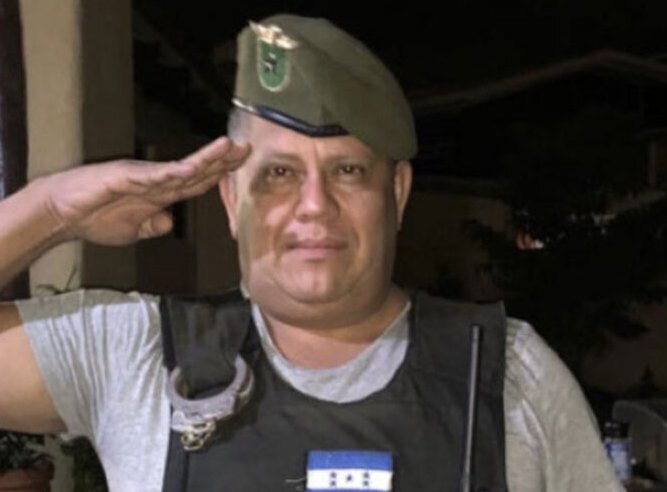
Photo caption: Geovanny David Fuentes Ramirez. Photo from hondudiario

Photo caption: Geovanny David Fuentes Ramirez. Photo from hondudiario

What Happened Today:

  • Jury selection

Key Details That Surfaced:

  • Before jury selection began, Judge P. Kevin Castel advised that he had received information that an individual close to the defendant, Geovanny Fuentes Ramirez (from here on in GFR) had threatened the wife of one of the witnesses that will be called by the prosecutors. Judge Castel warned that an investigation would be carried out and if found to be true, GFR could face an obstruction of justice charge as well.

  • The defense expressed concern that information had been leaked by the government regarding the identity of CC-14 (named in the most recent evidence submitted by the government and believed to be a family member of GFR)

  • A list of names of places, people, and businesses was given to the selected jury members that include several names of Honduran politicians and convicted drug traffickers. This is to help the jury keep track of all the names that may be used throughout the trial.

What Will Happen Tomorrow:

  • Opening remarks from the prosecutors and the defense

  • The first witnesses is expected to be called

Stay tuned for detailed daily summaries

U.S. Indictment of “El Tigre” Bonilla: Just the Tip of the Impunity Iceberg

Today, the U.S. Justice Department, Southern District of New York indicted Juan Carlos “El Tigre” Bonilla Valladares on four counts of drug trafficking and related weapons charges. Bonilla Valladares is a former head of the Honduran National Police and a former Regional Police Chief of the western Department of Copan in Honduras.

According to the press statement announcing the indictment, “Juan Carlos Bonilla Valladares allegedly abused his official position to protect cocaine shipments and murder a rival drug trafficker as part of a conspiracy involving high-ranking Honduran politicians and members of the Honduran National Police.”

Juan Carlos “El Tigre” Bonilla. Photo: ABC News

Juan Carlos “El Tigre” Bonilla. Photo: ABC News

The indictment makes direct reference to President Juan Orlando Hernandez’s involvement in drug trafficking. It outlines how Bonilla Valladares worked in coordination and on behalf of Tony Hernandez, the brother of current President Juan Orlando Hernandez (JOH) and President JOH himself: “BONILLA VALLADARES corruptly exploited these official positions to facilitate cocaine trafficking, and used violence, including murder, to protect the particular cell of politically connected drug traffickers he aligned with, including [Juan Antonio “Tony”] Hernandez Alvarado and at least one of Hernandez Alvarado’s brothers, who is a former Honduran congressman and the current president of Honduras referred to in the Complaint charging BONILLA VALLADARES as “CC-4.”

The press statement and indictment can be found here

Just the Tip of the Impunity Iceberg

For years, Bonilla has been the subject of controversy and faced public accusations of extrajudicial killings, torture, ties to drug cartels and organized criminal groups operating inside the National police, and corruption. His indictment for drug trafficking in the U.S. is only the tip of the iceberg.

Previous accusations against Bonilla show how he and the Honduran police are deeply involved in organized crime; how mechanisms to stop violations of the Honduran police do not function as they should; how impunity has reigned for years; and how investigations against those intertwined with the powerful and large-scale drug traffickers in Honduras, never ever advance. 

Death-Squad Killings of Young People

In 2013, the Center for Economic Policy and Research (CEPR) published an overview of news articles from the Associated Press, Insight Crime, U.S. Government documents published by Wikileaks, that describe Bonilla’s shady past. All sources describe a 2002 investigation conducted by the former Chief of the Internal Affairs of the Honduran Police, Maria Luisa Borjas against Bonilla and other police officers, involved in “at least three killings or forced disappearances between 1998 and 2002.” Bonilla was accused of killing Honduran youth. In 2002, Bonilla was charged with murder but was either found not guilty two years later or prosecutor’s dropped the case before it went to trial. 

Murdering Rival Drug Traffickers

One of the murders of a drug rival that Bonilla is allegedly tied to, was also discussed in Tony Hernandez’s trial in New York in October 2019. The rival mentioned is Franklin Arita Mata, who was killed in July 2011 in an ambush of his bulletproof vehicle transporting the principal victim and three of his bodyguards. 

The Honduran press reported on the 2011 incident writing that Mata’s car was attacked by unknown individuals traveling in two vehicles. Furthermore, in response to the murder, Bonilla, as the Regional Police Chief responsible for the jurisdiction where the incident took place, told the press that various police teams would be sent to investigate.

Involvement In a Police-led Organized Criminal Death Squad

In 2014, Honduran journalist David Romero read a testimony on Radio Globo of an unidentified police agent that had worked alongside Bonilla. The police agent turned whistleblower outlined several crimes including torture, rape, and death squad killings involving Bonilla and several members of the Honduran police. The testimonies gave a lot of detail about specific murders committed by police-led organized criminal death squads that Bonilla was involved in. 

In one of the many cases that the testimony outlined, was the rape of a young woman in the northern city of Choloma. In order to force the young woman’s mother to help the police death squad locate “Amilcar El Renco,” the woman was kidnapped, taken to an unmarked “security” house, and raped. The agent’s testimony identifies the police agents involved in the incident, including  “El Tigre” Bonilla,  Egberto Arias Aguilar (former Police Commissioner, current location and position unknown), Eduardo Antonio Turcios Andrade (named in 2019 as head of the newly created Transportation Security Force (FUSET)), and Victor Lopez Flores (former Police Commissioner who pleaded guilty in U.S. courts for drug trafficking in 2017). The agent also stated that the police-led organized criminal death squad had support from the Federal Bureau of Criminal Investigation (DNIC) and an Analysis section of the National Police.

Honduran media would later report that Cristian Amilcar Sierra, also known as “El Renco”, who the police death squads were looking for in 2014, would be murdered in his home in Choloma in 2015 for allegedly being involved in the criminal activities of the gang “El banda de el Negro.” “El Negro” is likely Carlos Arnoldo “El Negro” Lobo who was extradited to the U.S., worked with the Los Cachiros and the Sinaloa drug cartel, and later convicted in the U.S. for large-scale drug trafficking. 

You’re Not Even Safe in a Courtroom in Honduras: Today’s Shoot-out in El Progreso

A few hours ago, a shoot-out occurred in the courthouse in the city of El Progreso, department of Yoro. It began inside the courthouse but shots were also fired outside in front of the building.  

Based on preliminary reports, at least three state security forces including National Police and Military Police were killed and at least six injured. Allegedly, some civilians were also injured and have been hospitalized.

Mendoza Progreso.jpeg

Apparently the shoot-out involved a planned operation to free a Mara Salvatrucha (MS-13) gang leader named Alexander Mendoza or “El Porky.” Mendoza had been heavily guarded and brought to the courthouse for unknown reasons. Mendoza was imprisoned in the Tamara prison, just north of the capital city, Tegucigalpa.

Screen Shot 2020-02-13 at 5.26.31 PM.png

According to initial reports, a Military Police vehicle was used by Mendoza and his collaborators to carry-out their operation. Individuals that were close to where the incident occurred report that a protected witness dressed from head-to-toe in a black cape, may have collaborated with the escape operation, as well as some of the security forces that were allegedly guarding Mendoza.

Now, the Honduran government is offering one million lempiras for information about Mendoza, who is on the loose.

From Tamara prison to maximum-security then back to Tamara prison

In April 2019, Mendoza was one of 12 “feared” and “dangerous” gang leaders who was transported by helicopter to the maximum-security prison La Tolva in Morocelí, El Paraíso.

At the time of this heavily guarded and widely reported transfer, President Juan Orlando Hernandez (JOH) gave a press conference and specifically mentioned Mendoza: “the three [Mendoza and two more] were convicted to 20 years in prison after being arrested for their leadership in criminal groups, extortion, and arms and drug trafficking in San Pedro Sula, in the northern region of Honduras.”

JOH also said: “this happens sometimes … that by judicial orders, they end up in the Tamara [jail]. There, they are totally relaxed committing crimes – the rule is that if they are dangerous, they have to go to a maximum-security prison.”

So why was Mendoza imprisoned in the Tamara prison after he was taken last year BY HELICOPTER – because of his highly dangerous status - to La Tolva jail? Why was Mendoza brought to the courthouse if he has already been sentenced?

Important questions to ask while considering:

1.     JOH justified the thousands of dollars (millions?) spent to construct U.S.-style maximum-security prisons to jail “dangerous and feared criminals” involved in “organized crime.”

2.     Several massacres last year inside Honduran prisons left dozens dead, and again, exposed the false assumption that maximum-security prisons are safer, not affected by corruption, and successfully help implement JOH’s national security plan. After all, maximum-security prisons are at the center of JOH’s national security plan and efforts to “combat organized crime.”

3. Control of the national prison system, and most likely all the decisions related to it, was officially handed over to the Honduran military after the massacres last year inside the prisons. Decisions like transporting prisoners, like Mendoza, is likely to have been made by the military unit in charge.

Not Safe in Courthouses or Near Police Stations in Honduras

As the security situation continues to deteriorate in the country, police stations and courthouses are definitely not safe.  Just in the last three months, there have been at least three attacks either by courthouses - like today’s - or close to or inside police stations. The most recent ones committed close to police stations:

On December 6, 2019: A man was killed inside the Trujillo police station in the afternoon. Two police were working inside the police station when the incident occured. At least seven armed individuals went into the station and killed a man that was being held behind bars inside the post.

On December 12, 2019: A public bus driver was shot and killed “three meters from the police station in the Las Brisas neighbourhood” in Tegucigalpa.

Our condolences to the relatives of the individuals that were killed today as well as to the residents of El Progreso that are experiencing a state of terror

Active Honduran Police Commissioner With Ties to U.S. Drug Cases Arrested for Money Laundering

This morning, Hondurans woke up to the news that police commissioner Leonel Luciano Sauceda Guifarro and his wife, Patricia Sbeltana Estrada Pacheco, had been arrested in Tegucigalpa.

A large police and military operation raided their Tegucigalpa-based home this morning and will conduct a “series of seizures of property illicitly obtained, 8 houses, 2 vehicles, 23 bank accounts, all properties of the accused” says the communiqué published by the Honduran Prosecutor’s Office.

Police commissioner Leonel Sauceda (on the couch) being arrested inside his home this morning. Photo by El Heraldo.

Police commissioner Leonel Sauceda (on the couch) being arrested inside his home this morning. Photo by El Heraldo.

“Commissioner General Sauceda Guifarro, in a period of eleven years (2006 – 2018) cannot explain the origin of 13,801,838.35 Lps [$563,000 USD] that involves 13 bank accounts in his name.”

At the time of writing, the police commissioner and his wife were being taken to police facilities in Tegucigalpa. They will appear before a judge over the next 48 hours.

Connections to U.S. Drug Cases: A Small Narco World in Honduras

This morning’s arrest has connections to drug cases in U.S. federal courts, specifically, the February 2016 extradition of Honduran drug trafficker, Juan Carlos Arbizú.

In June 2016, in an internal police document, the Director of the National Police Felix Villanueva Mejia was informed that Arbizú told a Police Commissioner - who was present when Arbizú was being escorted onto a plane to be handed over to U.S. authorities – that Arbizú had said out loud in the moment: “tell Sauceda that I’ll be waiting for him over there [in the U.S.] – I remember when he brought the bags.”

According to Honduran media ConfidentialHN, “Leonel Sauceda, had received bags with money obtained through illicit activities.” Arbizu’s comment may have been retaliation for Sauceda’s role of announcing Arbizú’s arrest to the Honduran press in his position as the Honduran Police spokesperson. They could even have been business associates.  

A U.S. federal court sentenced Arbizú in 2017 for his involvement in large-scale drug trafficking,. Among his collaborators are the Los Cachiros and Valle Valle cartels –both business associates of President Juan Orlando Hernandez’s brother, Tony Hernandez.  

Cleaning up the National Police?

Just ten days ago on January 30, Leonel Sauceda was promoted to police commissioner - one of the highest positions in the Honduran National Police.

Despite the April 2016 creation of the U.S.-funded Special Commission for the Cleanup and Transformation of the Honduran National Police (CEDTPN), Sauceda and other police believed to be involved in criminal activities, remain active and are promoted inside the institution. Sauceda has held various important positions inside the Honduran police since 1992, including Director of Human Resources, Director of the National Transit Police, Head of Public Relations, and Head of the Police in San Pedro Sula and Tegucigalpa.

Two public figures that represent Honduran “civil society” are involved in the CEDTPN including representatives of the U.S.-funded Association for a More Justice Society (ASJ). Up until last year, ASJ received over half of their total budget in Honduras from different agencies of the U.S. government.

To make the matters of cleaning up the police even more scandalous, police commissioner Sauceda has appointed César Bonilla as his attorney. Bonilla is the former Director of the extinct Directorate for the Investigation and Evaluation of the Police Career (DIECP) which was created in 2011 to “to evaluate police performance and remove officers implicated in corruption and criminal activity, including human rights abuses.” Apparently DIECP’s inevitable failure later led to the creation of the CEDTPN.

Other Scandals Involving Active Members of the Police in Narco Cases

Public scandals highlighting the failure of the Special Commission continue to surface. In November 2019, Honduran media reported that at least four active and inactive police officers were involved in the murder of Honduran journalist Angel Alfredo Villatoro in 2012.

A group of police officers were contracted by Los Cachiros drug cartel on behalf of an unnamed wealthy businessman in San Pedro Sula to kill the well-known journalist. Allegedly, Villatoro obtained the businessman’s iPad containing sensitive information, causing the businessman to panic in fear that Villatoro would publish the information found on the device.

Villatoro was then killed and silenced. A 2012 Inspector General report detailed the circumstances around Villatoro’s death including that before his disappearance and violent murder, the journalist was taken to the office of the National Direction of Special Investigation Services and later, to the place where his body was found.  

Honduran media reported that the 2012 Inspector General report had been given to the Direction of Disciplinary Issues of the National Police (DIDADPOL) and to members of the Special Commission to Clean-up the National Police.

Despite the existence of the report, at least four of the police officers involved in the disappearance and brutal murder of Villatoro, are still active in the Honduran National Police.

Going Up The Chain of Command

Many are speculating the reasons behind today’s arrest of the police commissioner.

Sauceda is believed to be close to the former Minister of Security and Presidential candidate for the National Party, Oscar Alvarez and the current mayor of San Pedro Sula, Armando Calidonio. In April 2019, Calidonio was detained in the Houston airport by U.S. migration authorities and later released. It is widely speculated in Honduras that Calidonio’s temporary detention is related to drug-trafficking investigations in U.S. federal courts.

Sauceda’s arrest may be part of a cover-up or an effort to silence him, particularly if he has information about high-level government involvement in drug trafficking.

It is possible that his arrest this morning may also be a Honduran government strategy to initiate criminal proceedings against him in Honduras, in order to prevent his extradition to the United States. The Honduras-U.S. extradition law specifically prevents extradition to the U.S. if a Honduran individual has pending criminal accusations in Honduras.

This strategy is believed to have prevented the extradition of former mayor Arnaldo Urbina Soto, currently serving 36 years in a normal – not maximum-security –  Honduran prison for money laundering.  The Urbina Soto family has close political and business ties to Tony Hernandez and President Juan Orlando Hernandez. Interesting, Urbina is known to “run the prison” in the city of El Progreso where he has internet access, unlimited visits, and is able to leave his cell whenever he wants. While he serves jail time in Honduras, he is protected from extradition and U.S. court proceedings.  

Fact Sheet: Why Hondurans Are Forced to Flee

Summary:

caravan.jpeg

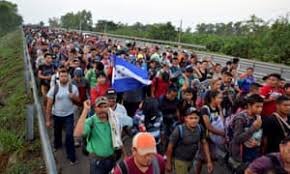
This fact sheet was compiled to provide a statistical context to the urgent crisis in Honduras that is forcing Hondurans to flee as refugees to neighbouring countries and to the U.S. border. It attempts to show the increasingly high cost of living that affect the daily lives and economic situations of millions of Honduran families. It provides a summary of the minimum wage and underemployment in the country for the small group of Hondurans that are able to find work but that suffer horrendous working conditions when their employers and the Honduran government do not abide by or enforce the labor code. This fact sheet also provides a few statistics related to the security situation in the country by looking at the homicide rate, the impunity rate, and the number of massacres that have occurred in the last few years. There is also a section about corruption and drug trafficking with details on involvement of government officials and Congressional representatives in corruption cases and drug trafficking. The final section includes statistics related to human rights issues and targeted populations such as students, Afro-indigenous Garifuna people, journalists, lawyers, and more.


Living Expenses in Honduras

Brief Context: Many Honduras will cite expensive living, unemployment, and other economic reasons for why they flee the country and why they cannot sustain their families in Honduras. Economic hardship is one of many complex reasons why Hondurans decide to pack up their belongings and flee in search of better living conditions.

Energy Prices: These continue to increase since the privatization of the National Electrical Energy Company (ENEE) in 2014. Honduran households began seeing the impact of the privatization in their energy bills in 2016 and since then, price increases have placed a growing burden on Honduran families (1).

  • Recent energy price increases: Between April 2018 and January 2020, energy prices increased by at least 40% at four different times (2). There is no end in sight as the Honduran government implements strict economic recovery measures to meet their macro economic agreements with the International Monetary Fund (3).

Gas Prices: Hondurans pay approximately the same prices as Californians at the gas pumps. California currently has the second highest gas prices in the United States.

  • In Honduras: (4)

    • 2018: lowest price: $3.26/gallon (Dec). Highest: $3.81/gallon (Oct)

    • 2019: lowest price: $3.16/gallon. Highest price: $3.72/gallon (May)

    • 2020: $3.60/gallon (Jan)

  • In California: (5)

    • 2018: lowest price: $3.15/gallon (Jan). Highest: $3.71 (Oct)

    • 2019: lowest price: $3.13/gallon. Highest price: $4.09 (Oct 2019)

    • 2020: $3.52/gallon (Jan)

Price of Basic Food Basket: This cost is $12.71 more expensive than the minimum wage earned by a Honduran employee working for minimum wage in a U.S. or Canadian-owned sweatshop in Honduras. (6)

  • In December 2019: The basic food basket included approximately 30 products for a 2,200 calories/day/person for a household of 5 people for a month: Total cost: 8,677.15 Lps/$348.48 USD or 1,735.43 Lps/person/$69.70 USD (7).

Healthcare and Education: The government invests little in public education and healthcare, particularly with the growing interests by the government and international financial institutions in privatization of both social services. Hondurans are increasingly forced to pay out of pocket for basic healthcare and public education. Some examples include:

  • Healthcare: There are no supplies and few medications provided in the hospitals. The crisis in the hospitals has worsened dramatically in the last 5 years. In order to be served by a physician, patients are expected to purchase all materials and medications. Long lines are a major problem.

  • Education: User fees continue to increase - Parents pay to register their children, pay for uniforms, books, sometimes desks, and the salaries of the security guards and janitors.


Minimum Wage and Underemployment in Honduras

Minimum Wage/Salaries: A minimum wage employee of a U.S. and Canadian-owned sweatshop earns $335.77 USD/month. Almost half of all people employed by the private sector do not receive minimum wage. This means that many private companies do not abide by the labour code, do not follow the law, and given the high impunity rate, are not held accountable.  

  • Minimum wage in Honduras depends on two factors: 1. Industry sector (there are 11 in total), 2. Number of people employed (except in special free trade zones whether it does not matter how many employees a company has)

  • The Honduran Labour Code is NOT ENFORCED. According to the Honduran Ministry of Work and Social Security (STSS), 43% of all private sector workers (653,096 workers) do not receive minimum wage. Young people are the most affected where 56.16% do not receive minimum wage (8).

  • 2020 minimum wage for private companies with 1 to 10 employees: Lowest: $271.59/month or $1.13/hour in agriculture, forestry, hunting, and fishing industry. Highest: $386.44/month or $1.61/hour in the financial establishment and real estate industry (9).

  • 2020 for companies located in free trade zones: Flat rate: 8,226.39 Lps/month or $335.77/month (9)

Underemployment rate: Over two thirds (62.8%) of the Honduran working population were underemployed in 2018 and 56% in 2017 (10). In comparison, in 2018 in the U.S., the underemployment rate was 11.1% according to the Economic Policy Institute.


Citizen Security (or lack there of)

Brief Context: Despite millions of dollars from the U.S., Canadian, and European Union governments to improve citizen security and address judicial delay and impunity rates, Honduras is not a safer country for its citizens. Many Hondurans that flee the country will refer to the insecurity and the deep mistrust of state security forces, the lack of action by the Public Prosecutor’s Office, and the justice system to investigate, prosecute, and bring perpetrators of crime to justice.

Homicide Rate: This continues to be one of the highest in the world. In 2017, Honduras had the third highest murder rate in the world (11).

  • 3,726 people were killed in Honduras (pop 8.5 million) in 2018. Homicide rate: 40.86 per 100,000 compared to the U.S. (4.9) or Canada (1.76) (12).

  • 70.5% of the homicides were committed with a firearm. 382 were women and 113 worked in the transportation industry (13).

Impunity rate: This rate is over 90% - this means that 9 out of 10 crimes are exempt from punishment and perpetrators are never brought to justice (14).

  • Impunity rate for crimes against human rights defenders: 97%

  • 75% of indictments filed by the Public Prosecutor’s Office, only 25% of the cases proceed to trial (14).

Massacres and Killings of Targeted Groups: Massacres occur frequently in Honduras and generate an overall environment of fear across the country. Massacres are defined as violent assassinations of 3 or more people in one incident.

  • In 2019, there were 70 massacres involving 281 victims, the majority were young people. This means that there is often more than one massacre in one week in Honduras all year round (15).

  • In the first 13 days of January 2019, there were 6 massacres in different cities around the country (16)

  • In the first 2 days of January 2020, 21 people were killed (17). In the first 15 days of January 2020, 15 women were killed (18).


Corruption and Drug Trafficking:

Brief Context: Millions of dollars have been stolen from Honduran state institutions for the benefit of government officials and their family members. The New York Southern District court has called the involvement of high-level government officials and state institutions in drug trafficking as “state-sponsored drug trafficking.” One Honduran anti-corruption state body stated that the Honduran government loses $480 million from corruption per year (19). This money could be going to social programs including healthcare, education, and other social programs to benefit the country’s poor and reduce the push factors that cause mass migration.

Corruption: Many corruption cases involve networks of government officials and their family members including the two former President’s wives.

  • The former first lady and wife of ex-President Porfirio Lobo was found guilty and sentenced to 58 years in prison for fraud and appropriating $779,000 USD of public funds destined for social programs (20)

  • 170 current and former Honduran Congressional representatives were involved in looting over $70 million from the Ministry of Agriculture and Livestock and other state institutions in the Pandora corruption case prepared by the anti-corruption body, the MACCIH (21).

  • $350 million was stolen from the Honduran National Social Security Institute (IHSS) and a portion of stolen funds went into funding the 2013 election of current President Juan Orlando Hernandez (22).

Drug Trafficking: Honduras is a narco-state that participates in “state-sponsored drug trafficking,” according to the Southern District Court in New York.

  • In October 2019, Juan Antonio “Tony” Hernandez, the brother of President Juan Orlando Hernandez was found guilty of four counts of drug trafficking, using illegal weapons to smuggle drugs, and lying to U.S. federal authorities in the Southern District Court of New York (SDNY) (23).

  • Current and former Presidents, Juan Orlando Hernandez and Porfirio Lobo Sosa are named as co-conspirators in Tony Hernandez’s drug case. Two current Congressmen, Oscar Nájera and Reynaldo Ekonomo were named in the same SDNY case for their involvement in aiding drug traffickers working with Tony Hernandez (24).


Human Rights Issues:

Brief Context: The human rights situation in Honduras has continued to worsen, particularly since the 2009 military coup. Journalists, lawyers, students, small farmers, Afro-indigenous Garifuna peoples, and many individuals critical of the government are targeted for speaking the truth, challenging the interests of the rich and powerful, and defending their territories. Hondurans that stay in the country to fight for true democracy and deep structural change must confront repression, criminalization, assassinations, threats, and imprisonment.

Land and Environmental Defenders: According to Global Witness, 120 Honduran activists were killed from 2010 to 2016 for “protecting their rivers, forests, or land” (25).

Small Farmers (Campesinos):

  • From 2010 to 2013, 88 members or associates of campesino movements have been targeted and killed in the northern Aguan Valley. At least three quarters of the killings remain in impunity (26).

  • Over 5,000 campesinos including approximately 700 women campesinos face charges as a result of land conflicts around the country (27).

Journalists and Lawyers: These professionals continue to be at greater risk and people who commit crimes against them enjoy a 92% impunity rate.

  • There were 66 murders of journalists from 2013 to 2019. 24 were investigated and only 8 cases went to trial (28).

  • Reporters ‘Without Borders’ wrote that since securing his (illegal) second term in 2017, President Juan Orlando Hernandez has “increased control over news and information and takes a range of initiatives to silence the most outspoken journalists” (29).

  • From 2010 to 2014, 29 people that identified as journalists were murdered. All crimes have 97% impunity. 12 of these killings occurred in 2012 (30).

  • 77 murders of journalists & lawyers from 2001 to 2019, only six have been investigated and 71 remain in impunity (30).

Afro-indigenous Garifuna: Eight Garifuna people, mostly leaders and women, were killed from September 2019 to Dec 2019. (31)

Political Prisoners & Imprisoned Water Defenders: Nine political prisoners are in jail for protesting government privatization policies and extraction projects. All have been held in maximum-security prisons.

  • Over 23 political prisoners were imprisoned between 4 months to two years after the 2017 electoral crisis. The majority were jailed in military-run, maximum-security prisons (32).

  • 8 water and life defenders from Guapinol & other communities in the area remain imprisoned for defending their environment, water supply, and resisting mining operations in a national park (33).

  • Rommel Herrera, a young teacher, remains imprisoned after arrested and accused of damages to the U.S. Embassy during a protest (34).

Human Rights Defenders: Are killed and frequently attacked for their work defending human rights.  

  • From 2014 to August 2018, 65 human rights defenders were murdered in Honduras (35).

  • In 2016 and 2017, human rights defenders, their organizations, and family members reported more than 1,232 attacks against them (35).

Students: Students involved in protesting the privatization of education are often targeted and criminalized.

  • Many University students participated in protests in defense of public education in 2014 and 2016. In this context, 70 were criminalized and 24 were expelled from university (36). At least 15 more were criminalized in 2017 (37).

  • Approximately 21,000 students (elementary, high school, and university) were killed from 2010 to 2016 (38). Over 89 students were killed in 2019 alone (39).


References

(1) “IMF Policies and the Privatization of the National Energy Company Hits Honduran Households”, September 24, 2016. http://www.aquiabajo.com/blog/2016/9/24/imf-policies-the-privatization-of-the-national-energy-company-hits-honduran-households.  And also see “The IMF and Privatization of Honduras: Impact on the National Energy Company”, December 17, 2014. http://www.aquiabajo.com/blog/2014/12/the-imf-and-privatization-in-honduras.html

(2) 10% energy price increase in April 2018: “Descontento popular en Honduras por aumento del 10% a la energy”, April 1, 2018: https://www.lavanguardia.com/vida/20190401/461402975116/descontento-popular-en-honduras-por-aumento-del-10--a-la-energia.html; 18% price increase in October 2018: “Tarifa electrica sube 18% para clientes residenciales y 12% para otros sectors” October 2018: https://www.laprensa.hn/honduras/1223700-410/tarifa-electrica-sube-clientes-residenciales-aumento-factura-enee; 10% in April 2019: “Trancazo: tarifa de energya eléctrica aumenta un 10% a partir de abril” March 30, 2019: https://www.laprensa.hn/honduras/1271677-410/tarifa-energ%C3%ADa-luz-honduras-trancazo-aumento-incremento-medicion-eeh-enee-electrica3.64% increase in January 2020: “CREE aprobó nuevo incremento en la , tarifa de energía eléctrica para el 2020” December 31, 2019: https://hondudiario.com/2019/12/31/cree-aprobo-nuevo-incremento-en-la-tarifa-de-energia-electrica-para-el-2020/

(3) La Prensa, “Déficit de la ENEE autmentó L20,351 milliones en los últimos seis años”, January 20, 2020: https://www.laprensa.hn/economia/1351908-410/deficit-enee-aumento-20351-millones-lempiras-ultimos-seis-anos. The reasons for ENEE’s deficit are complex but corruption plays a defining role in the energy company’s poor economic situation that has grown over several years.

(4) Gas prices in Honduras: https://proceso.hn/index.php/component/k2/item/213760-tabla-de-precios-de-los-combustibles-2020

(5) Gas prices in California: information calculated using the California Energy Commission’s data found at: https://ww2.energy.ca.gov/almanac/transportation_data/gasoline/retail_gasoline_prices2_cms.html

(6) This is calculated using the data listed and referenced in the ‘minimum wage section’ of this fact sheet.

(7) El Heraldo, “Costo de la canasta alimenticia es de L 8, 677.15 al mes en Honduras,” December 2019, https://www.elheraldo.hn/economia/1340283-466/costo-canasta-alimenticia-es-del-867715-al-mes

(8) El Heraldo, “Empresas no pagan salario mínimo al 43% de trabajadores.” May 2019, https://www.elheraldo.hn/economia/1256529-466/empresas-no-pagan-salario-m%C3%ADnimo-al-43-de-trabajadores

(9) Honduran Ministry of Labor and Social Security, “Tabla de salario mínimo 2020” http://www.trabajo.gob.hn/tabla-de-salario-minimo-2019-y-tabla-del-bono-educativo-2019/

(10) El Heraldo, “La tasa de subempleo subió a 62.8% durante 2018 en Honduras.” January 2019, https://www.elheraldo.hn/economia/1253875-466/la-tasa-de-subempleo-subi%C3%B3-a-628-durante-2018-en-honduras

(11) United Nations Global Study on Homicide 2019. http://worldpopulationreview.com/countries/murder-rate-by-country/

(12) Comisión Interamericana de Derechos Humanos, Informe de pais, Honduras, “Situación de derechos humanos en Honduras” August 27, 2019, page 36 https://www.oas.org/es/cidh/informes/pdfs/Honduras2019.pdf

(13) Ibid, page 38.

(14) Ibid, page 46 and 47

(15) El Tiempo, “2019 en Honduras cierra con 70 masacres: 281 víctimas, mayoría jóvenes.” December 31, 2019, https://tiempo.hn/2019-en-honduras-cierra-con-70-masacres-281-victimas-mayoria-jovenes/

(16) El Heraldo, “Honduras registra seis masacres en los primeros días de 2019” January 13, 2019, https://www.elheraldo.hn/sucesos/1249625-466/honduras-registra-seis-masacres-en-los-primeros-13-d%C3%ADas-de-2019

(17) La Prensa, “Alarmante: 21 homicidios tras iniciar el 2020 en Honduras.” January 2, 2020. https://www.laprensa.hn/sucesos/1345869-410/homicidios-honduras-primeros-dos-dias-enero-nuevo-a%C3%B1o

(18) HRN, “15 mujeres han sido asesinadas en los primeros días del 2020 en Honduras.” January 14, 2020, https://radiohrn.hn/15-mujeres-han-sido-asesinadas-en-los-primeros-dias-del-2020-en-honduras/

(19) El Tiempo, “Unos L. 10 milliones pierde el Estado de Honduras en materia de corrupción.” August 10, 2017, https://tiempo.hn/corrupcion-en-honduras-perdidas/

(20) Reuters, “Former first lady of Honduras sentenced to 58 years in jail.” September 4, 2019, https://www.reuters.com/article/us-honduras-corruption/former-first-lady-of-honduras-sentenced-to-58-years-in-jail-idUSKCN1VQ00Y

(21) El Heraldo, “Hasta 360 diputados y exdiputados esta salpicados por caso Pandora” August 6, 2019. https://www.laprensa.hn/honduras/1307807-410/corrupcion-caja-pandora-honduras-juan-orlando-hernandez-joh-desvio-fondos-

(22) Reuters, “Honduras president: graft-linked companies helped fund my campaign.” June 3, 2015, https://www.reuters.com/article/us-honduras-corruption/honduras-president-graft-linked-companies-helped-fund-my-campaign-idUSKBN0OJ26B20150603

(23) New York Times, “Honduran President’s brother found guilty of drug trafficking.” October 18, 2019, https://www.nytimes.com/2019/10/18/world/americas/honduras-president-brother-drug-trafficking.html

(24) Contracorriente, “Tiempo de crímenes: un juicio sobre el control narco en Honduras.” https://contracorriente.red/2019/10/14/tiempo-de-crimenes-un-juicio-sobre-el-control-narco-en-honduras/

(25) Global Witness, “Honduras: the deadliest country in the world for environmental activism.” January 31, 2017, https://www.globalwitness.org/en/campaigns/environmental-activists/honduras-deadliest-country-world-environmental-activism/

(26) Annie Bird, Rights Action, “Human rights violations attributed to military forces in the Bajo Aguan Valley in Honduras.” Februray 20, 2013, https://rightsaction.org/sites/default/files/Rpt_130220_Aguan_Final.pdf, and Comisión Interamericana de Derechos Humanos, Informe de pais, Honduras, “Situación de derechos humanos en Honduras” August 27, 2019, page 98 https://www.oas.org/es/cidh/informes/pdfs/Honduras2019.pdf

(27) Conexihon, “Mas de 5,000 campesinos procesados judicialmente en Honduras,” March 2015, http://old.conexihon.hn/site/noticia/derechos-humanos/conflicto-agrario-y-minero/m%C3%A1s-de-5000-campesinos-procesados-judicialmente

(28) Comisión Interamericana de Derechos Humanos, Informe de pais, Honduras, “Situación de derechos humanos en Honduras” August 27, 2019, page 62 https://www.oas.org/es/cidh/informes/pdfs/Honduras2019.pdf

(29) Reporters Without Borders, “Honduras” https://rsf.org/en/honduras

(30) Statistic reported by the Honduran Human Rights Commission (Comisionado de Derechos Humanos de Honduras CONADEH) and reported by Once Noticias, “Casos sin resolver: “otro día del periodista” y persisten las cifras alarmantes de impunidad en asesinatos de comunicadores. May 26, 2019, https://www.oncenoticias.hn/persisten-cifras-alarmantes-impunidad-asesinatos-comunicadores/

(31) Black Fraternal Organization of Honduras (OFRANEH), “Basta ya de asesinatos contra el pueblo Garifuna” November 5, 2019, https://ofraneh.wordpress.com/2019/11/05/basta-ya-de-asesinatos-contra-el-pueblo-garifuna/

(32) United Nations Human Rights Office of the High Commissioner, “Las violaciones a los derechos humanos el el context de las elecciones de 2017 en Honduras.” 2017, https://www.ohchr.org/Documents/Countries/HN/2017ReportElectionsHRViolations_Honduras_SP.pdf

(33) Center for Studies for Democracy (CESPAD), “Guapinol y Sector San Pedro: Situación de presos politicos por el agua y la vida.” September 12, 2019, https://cespad.org.hn/2019/09/12/guapinol-y-sector-san-pedro-situacion-de-presos-politicos-por-el-agua-y-la-vida/

(34) Committee of Relatives of the Detained-Disappeared in Honduras (COFADEH), “En espera la libertad de Rommel.” October 10, 2019. https://defensoresenlinea.com/en-espera-la-libertad-de-rommel/

(35) Comisión Interamericana de Derechos Humanos, Informe de pais, Honduras, “Situación de derechos humanos en Honduras” August 27, 2019, page 88 https://www.oas.org/es/cidh/informes/pdfs/Honduras2019.pdf

(36) Ibid, page 90

(37) C-LIBRE, “15 nuevos estudiantes universitarios criminalizados por participar en protesta” August 7, 2017, http://www.clibrehonduras.com/index.php/alertas/criminalizacion-de-la-protesta-publica/724-15-nuevos-estudiantes-universitarios-criminalizados-por-participar-en-protesta

(38) Statistics collected by the Violence Observatory of the National Autonomous University of Honduras and reported by Notibomba, “Mas de 21 mil estudiantes asesinados en los últimos 7 años en Honduras,” September 3, 2018, https://notibomba.com/21mil/

(39) La Prensa, “Estudiantes de secundaria, blanco constante de la violencia en Cortés y Francisco Morazán,” November 19, 2019, https://www.laprensa.hn/honduras/1334416-410/estudiantes-asesinados-honduras-violencia-seguridad-educacion